The HVO demonstration project at Kehelland has been running successfully now for five years. The sense of achievement there is tempered by understandable frustration over the lack of progress.

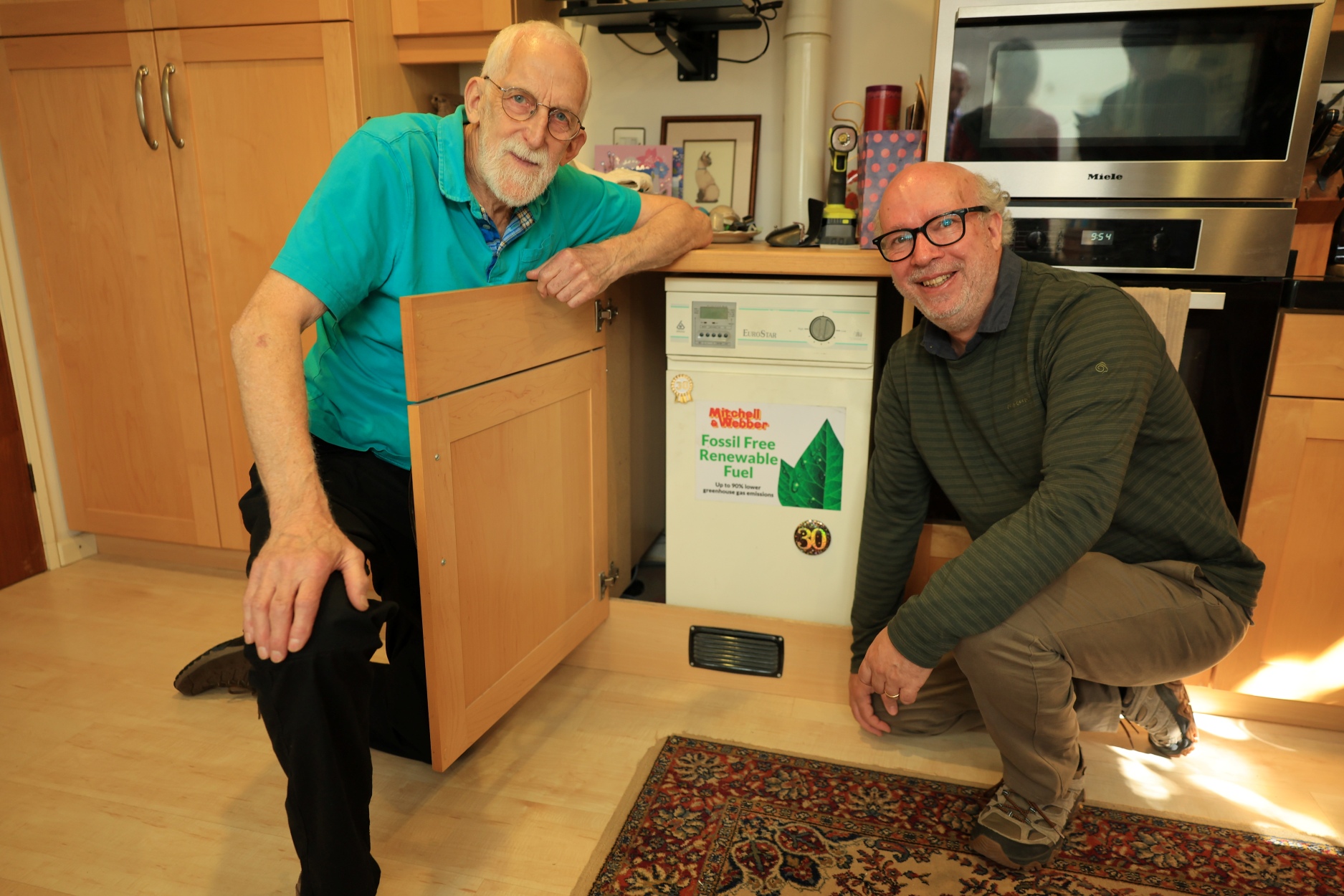
It’s hard to believe that the HVO demonstration project has been running successfully now for five years. It’s a project that has put the Cornish village of Kehelland firmly on the decarbonisation map, but the sense of achievement there is tempered by understandable frustration over the lack of progress.
Talking to the residents at an event to celebrate the fifth anniversary, it’s clear who they think is responsible for the delays. “It’s the government – I can’t understand what they’re waiting for” was a much-repeated comment. “We’ve had endless visitors to Kehelland; MPs, civil servants, government ministers, select committees, the local council, you name it. We’ve written to them, answered all their questions, we even travelled to London to deliver our consultation response to DESNZ in person. We tell them what a brilliant solution it is, they listen and seem to say all the right things, but nothing happens!”
Asked why they joined the trial, the residents provide answers which are likely to chime with many other rural householders. All, without exception, thought it was important to do their bit to help reduce their carbon emissions – some had already invested in solar panels and electric vehicles. But when it came to decarbonising their heating systems, there were problems. Quotes for heat pumps were invariably too expensive, there were concerns about the local electricity supply, and a general wish for choice. “No one likes being told what to do” was a frequent comment.
Personal circumstances and specific usage requirements were also factors. One resident, an elderly retiree, said he was concerned about whether it was worth depleting his vital savings for something he was unlikely to live long enough to get full value from. The trustees of the village hall highlighted the intermittent use of the building, and the need for quick heat as a priority, along with ensuring heat wasn’t wasted unnecessarily when the building wasn’t being used. A simple system allowed users to run the HVO-fuelled heating for set periods, depending on how long they were using the building – not something that could be easily replicated with a heat pump.
What was very striking was how, even after five years, their collective enthusiasm for HVO remains undimmed. All the residents were clear that they’ve used significantly less fuel since switching to HVO and that they liked the absence of the kerosene smell. The ease of conversion was also welcomed and the fact that it cost little or nothing to switch. Unexpected benefits also emerged; a COPD sufferer said that he can now work outside in the garden again without symptoms when the boiler is running on HVO, which he couldn’t do when it was fuelled by kerosene.
The technical benefits of HVO were immediately clear when one of the boilers was opened for servicing. Even after a year, there was no soot to be seen, and the nozzle still looked brand new. One resident’s boiler was 30 years old but was running cleanly and efficiently on the renewable fuel. “It’ll outlive me!” he joked.
Kevin King, the onsite technician strongly endorsed the fuel, stating how much he preferred working on the HVO-fuelled boilers. “It’s so much cleaner, you don’t need to hoover out all the soot, and you don’t get home dirty and smelling of kerosene”. He said: “It’s something all oil technicians should be supporting” he added.

The success of the Kehelland work owes much to the tireless efforts of John and Robert Weedon, directors of local fuel supplier Mitchell and Webber. While sharing the resident’s frustration they remained resolutely optimistic.
John Weedon said: “We’re confident in this solution and see many reasons to stay positive. The new Prime Minister, Andy Burnham, has stated that the government hasn’t been listening, and that needs to change. The new DESNZ minister has also talked about the need to not impose unnecessary cost on households as part of efforts to achieve Net Zero. The use of HVO for heating fits well with these ideas and I know letters from Kehelland residents are already landing on Mr Burnham’s doormat.”
Robert added: “The only way the government will make progress quickly with off-gas grid decarbonisation, is to listen to the Kehelland residents and support the deployment of HVO for heating. It ticks all the right boxes, and we’ll continue to work with colleagues from OFTEC and UKIFDA until we succeed in getting this supported – we’ve come too far to give up now.”
Images provided by Mitchell & Webber