With much discussion on HVO appearing in trade journals over the last couple of years, this article is intended to clarify what is likely to happen to domestic heating fuel in the next few years.

With much discussion on HVO appearing in trade journals over the last couple of years, this article is intended to clarify what is likely to happen to domestic heating fuel in the next few years.
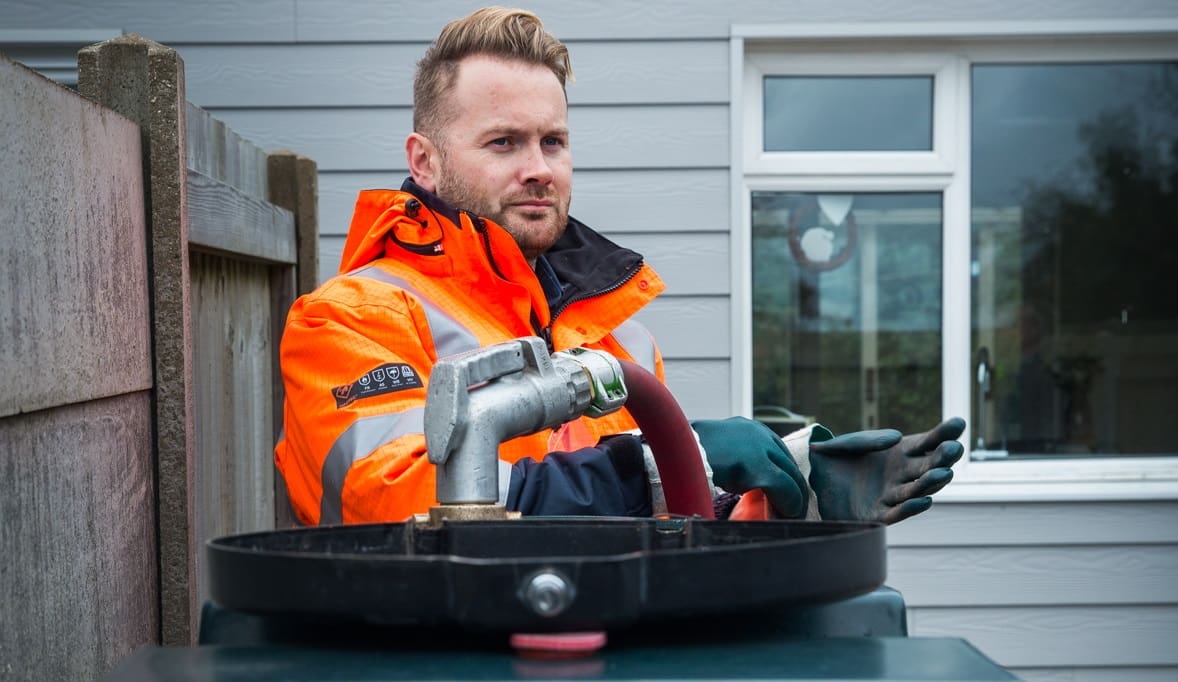
You will have read that OFTEC, UKIFDA and other industry partners have been lobbying hard for the inclusion of renewable liquid fuel in regional government home decarbonisation strategies.
In 2019, the Westminster Government challenged industry to show that Kerosene could wholly be displaced with an alternative renewable liquid fuel. From what we knew about HVO, this challenge was accepted and at a cost to industry in the region on £750,000, set about developing a demonstrator project that converted over 150 installations in homes, schools, offices, and a church, with the aims of demonstrating that HVO could a) be combusted in new and existing equipment, b) that infrastructure existed to get the fuel to the point of use, and c) skills existed in the field to manage the conversions.
After multiple heating seasons, most of these installations have been converted back to Kerosene, but around 40 remain burning a 20% blend of HVO in Kerosene.
The project was successful with only very minor technical issues being encountered in aging equipment, and it has proven to officials that we can indeed displace Kerosene use. The question for governments now becomes how quickly they want to reduce emissions from the oil-fired sector, balancing the economics given that HVO costs more than Kerosene.
In all probability, moving all installation to 100% HVO is unlikely and blends will provide a low risk and affordable pathway to full Kerosene displacement. This strategy keeps running costs to a minimum and shows a positive policy signal to attract investment in UK HVO production.
Having a robust fuel quality standard is key to avoiding problems and maintaining industry confidence. Through 2025, fuel standard BS 2869 has been undergoing review to permit up to 20% HVO to BSEN 15940 to be blended with Class C2 Kerosene.
The great news is that the blend can be achieved with the final product remaining within the current fossil Kerosene specification. Therefore, the reduced carbon fuel can be treated as a Kerosene and does not require any additional technician intervention on servicing and commissioning.
Updated BS 2869 is expected to be published during 2026.
Image from OFTEC
© 2026 Created by Euromedia Associates Ltd