This is a great opportunity for the liquid fuel sector, currently providing home heating oil for over 700,000 homes in the Republic of Ireland.

This is a great opportunity for the liquid fuel sector, currently providing home heating oil for over 700,000 homes in the Republic of Ireland.
The introduction of a renewable heating obligation in the Republic of Ireland will be a significant milestone. Legislation is due to be introduced in 2026, with a possible commencement of the scheme in 2027.
The RHO will herald a major departure in decarbonising home heating through obliging fuel suppliers to ensure that a proportion of their product is renewable. This is a great opportunity for the liquid fuel sector, currently providing home heating oil for over 700,000 homes in the Republic of Ireland, representing over 40% of the heating market.
It sends a clear signal at home and abroad that a single choice policy of heat pumps (electrification) cannot deliver on climate change targets alone.
It has been widely reported that the Republic is failing miserably at its own targets for heat pump installs and retrofits. To repeat, the Climate Action plan targets 500,000 residential retrofits and the deployment of 400,000 heat pumps, plus the delivery of up to 2.7 terawatt hours of district heating capacity by 2030.
According to the Economic and Social Research Institute (ESRI) they claim the ‘State’ was “materially off-track” on all three targets.
By the end of 2024, the report noted that deep retrofits reached 57,932 (11.5 per cent of the target) while heat pump installations were estimated at 14,194 (3.5 per cent of the target).
The main barrier driving this under delivery is cost. Using data from the Sustainable Energy Authority of Ireland (SEAI), the report noted the median (middle value) cost of a deep energy retrofit ranges from €22,914 for an apartment to €66,503 for a detached house, with the portion of the cost covered by the homeowner ranging from €16,378 to €42,900.
These figures do not stand up to scrutiny in the current economic climate. People are not prepared (or able) to pay such large sums, and many have started querying the payback.
At the time of writing this article the Department of Climate, Energy, and the Environment (DCEE) has advised us (TAZCH) that elements of the RHO which incentivise the domestic production of biomethane have been blocked by the European Commission following a scrutiny process. The Commission has found that the proposals are anti-competitive and must be reviewed by the Government.
Although this does not relate to liquid fuel, it is nonetheless a significant setback for the scheme. Despite this, civil servants are saying that ‘it’s business as usual’ and the legislation is proceeding as per their timeline of publication before the end of the summer Oireachtas term. By any measure, this seems to be a highly optimistic aspiration.
Given ‘favouritism’ to indigenous biomethane (their proposal in the RHO was to give biomethane a 1.5 multiplier) was never going to go down well with other EU states – biomethane from other EU countries imported and used locally would just as easily contribute to reducing carbon emissions!
In the light of this decision by the EU, there is now an opportunity to look again at the proposed scheme and adjust it to ensure it is fit for purpose to reduce carbon emissions in the home heating sector.
We have already argued that the low blend obligation at the start (1.5%) will not drive meaningful additional blending to the liquid fuel market and the initial costs to meet this obligation do not stand up to scrutiny. Our sector can deliver a 20% blend of low carbon liquid fuel. For the scheme to operate effectively, a minimum obligation rate of 5% must be introduced.
Otherwise from a liquid fuel perspective, the RHO will see no additional renewable fuels introduced, no decrease in carbon emissions and an increase in costs to consumers due to compliance costs.
Our sector has always argued that in its present form the proposed RHO is not an effective way to decarbonise and we need to come up with a scheme that is workable for all and delivers genuine environmental benefits at a proportionate cost. We have suggested to the Minister and his civil servants that, given the recent EU decision, they should remove liquid fuels from the RHO and merge it with the transport sector to create a single Renewable Liquid Fuel Obligation Scheme.
We believe that this can be done by updating the existing Renewable Transport Fuel Obligation Scheme (RTFO). This would be a relatively straightforward way of allowing the liquid fuel sector to deliver significantly higher levels of renewable fuel such as HVO, while the gas sector could proceed at the levels current capacity will allow.
TAZCH is pushing hard for a revision to the RHO with a particular emphasis on bringing our message to politicians across all parties. We are hopeful that sense will be seen, and a revised format is agreed that includes a definitive road map for an increasing scale of blend that gives importers confidence rather than just nominal compliance.
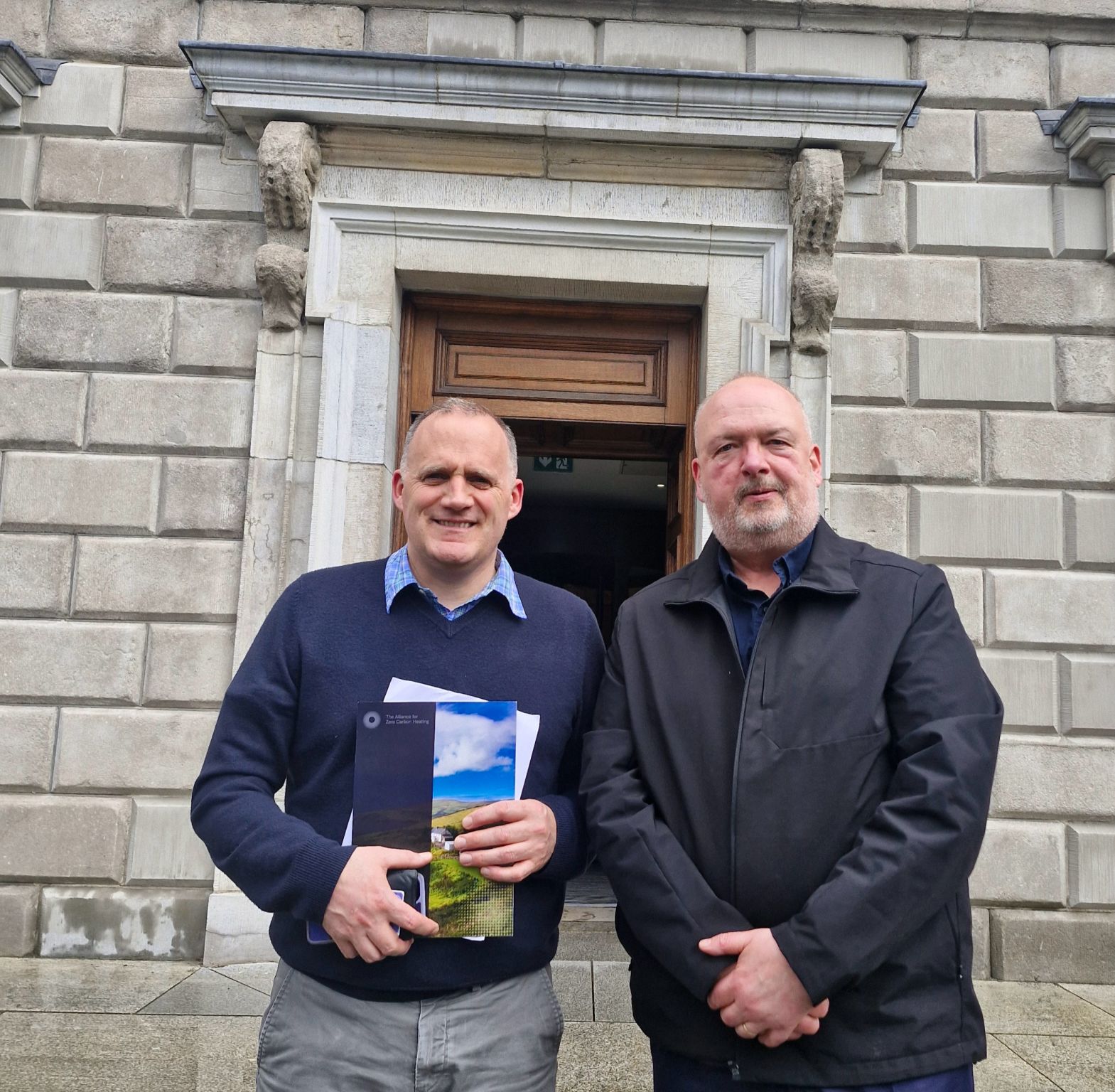
Image provided by OFTEC
© 2026 Created by Euromedia Associates Ltd