Looking back, looking forward: Martyn Bridges reflects on 50 years in heating
OFTEC
2 September 2026
As he prepares to retire after 48 years in heating – 40 of them with Worcester – Martyn Bridges talks to Oil Installer about an accidental start, the people and ideas that shaped his career, what the industry has gained and lost, and why its future belongs to those prepared to keep learning.
There is something fitting about the fact that, after a working life spent talking about heating, Martyn Bridges begins his retirement interview by talking about what he plans to do when he no longer has to. He wants to improve his swimming, learn a language and continue the watercolour painting he has recently discovered. Most of all, he is looking forward to the freedom of an empty diary.
“On a dark winter morning, I will be able to walk the dog for two hours rather than hurry back for an 8.00 meeting,” he says. “I will not have to read half a dozen government consultations a day. It will be nice to read a book because I chose it.”
After 48 years in heating, including four decades at Worcester, Martyn is clear that retirement will be a genuine departure. “I will press the delete button on the heating industry in my brain and fill it with newer, fresher things.” The words are characteristically wry, warm and lightly self-deprecating, but the decision has been thoughtful.
Seeing friends become seriously ill or die younger than expected sharpened his sense that time should not be taken for granted. Worcester has also handled the transition well, gradually increasing his days away from work and firmly instructing him not to check email: training for retirement, in effect.
An accidental career
Nothing about Martyn’s entry into heating suggested a carefully mapped career. He left school at 15 with no clear idea what a heating engineer did and, like most of his friends in the late 70s, was steered towards learning a trade rather than university. Carpentry and electrical apprenticeships were possibilities, but heating came first.
The reality was a shock. Much of the work was commercial, in schools and hospitals, and heavy enough to send a 15-year-old home exhausted. After completing his five-year apprenticeship, he was made redundant – a familiar pattern when a newly qualified engineer cost almost as much as an experienced one and could be replaced by another supported apprentice.
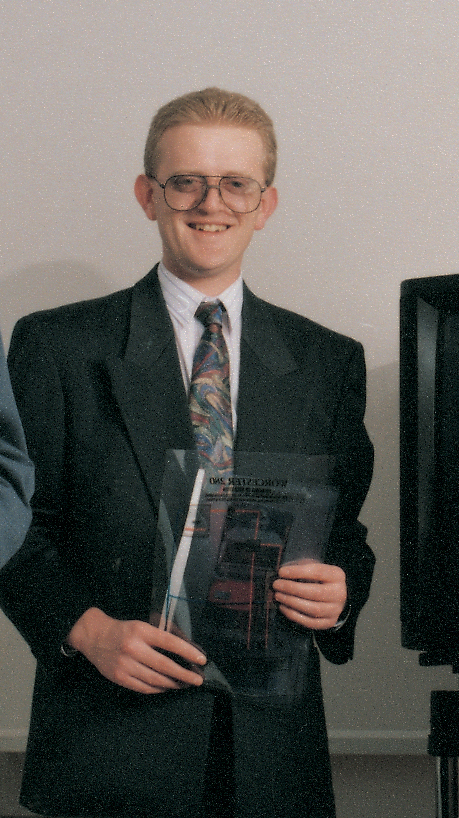
Following a spell with NCP, Martyn saw an advertisement for Worcester Engineering in 1986. A recruitment agency rejected him for lacking the right qualifications, so he went directly to founder Cecil Duckworth – and got the job. “If I had accepted the agency’s answer, I probably would not be talking to you now.”
The role offered what he calls “the lighter side” of an industry he understood. Instead of lifting carpets and floorboards in customers’ homes, he would support installers by telephone, letters and the newly introduced Fax technology. It began a career spanning technical support, system design, installer training, product management, marketing and, ultimately, external affairs.
“The homeowner wants a warm house and a hot bath. The product has to work for the installer and deliver the outcome the customer wants.”
Martyn Bridges
When manufacturers began listening
Worcester was a very different business when Martyn arrived. Oil and solid fuel appliances were central to its sales and whole-house central heating was still far from universal. Cecil had also taken the company into combi boiler manufacturing early. Rather than compete head-on with established manufacturers in the mainstream gas boiler market, he chose a technology still unfamiliar to many installers.
At the time, installers had to seek permission from the local water company before connecting a combi to the water mains. Martyn became involved, to a modest degree, in changing the water regulations so that prior permission was no longer required. Once that barrier disappeared, the combi market grew rapidly – and Worcester was well placed to benefit.
Technical-support calls came almost continuously. “I could talk to installers in their own language because I had been one of them,” Martyn says. He also produced heating designs by hand for housebuilders, working at a drawing board while the telephone rang beside him. In a company of around 100 people, job boundaries were loose: if a delivery arrived after hours, everyone available helped unload it, Cecil included.
Martyn followed Neil Schofield as one of Worcester’s first training engineers and for over 3 years, would spend one week a month in Livingston training installers in Scotland. Building confidence around unfamiliar oil burners and combis became one of his most satisfying roles.“Seeing the light-bulb moment when somebody suddenly understands something is extremely fulfilling.”
As Worcester entered another phase, Cecil appointed Richard Soper as sales and marketing director. Martyn remembers him as “a whirlwind” – creative, enthusiastic and intensely driven. Richard later asked him to become a product manager, the latest in a succession of roles for which he had never applied.
Of all those who shaped his career, Martyn named Richard without hesitation. Cecil employed him; Richard, he says, “sharpened my game”. He helped transform Worcester from a company that made good products and expected them to sell, into one that started with the customer and, crucially, the installer, first.
The principle was straightforward: make reliable products that installers found easy to fit; support them quickly; listen to their feedback; and help their businesses beyond the appliance. Worcester took prototypes to installers, watched how they worked and changed anything that made the job harder.
For Martyn, that closer relationship is one of the industry’s greatest improvements. When he was on the tools, installers largely bought what the merchant stocked. Today, they can speak to designers, visit factories and influence what comes next. What has been lost is simplicity. Higher expectations for efficiency, emissions and electrical consumption have brought more electronics, controls and continual learning. The job has not simply become harder, he suggests; it has become wider.
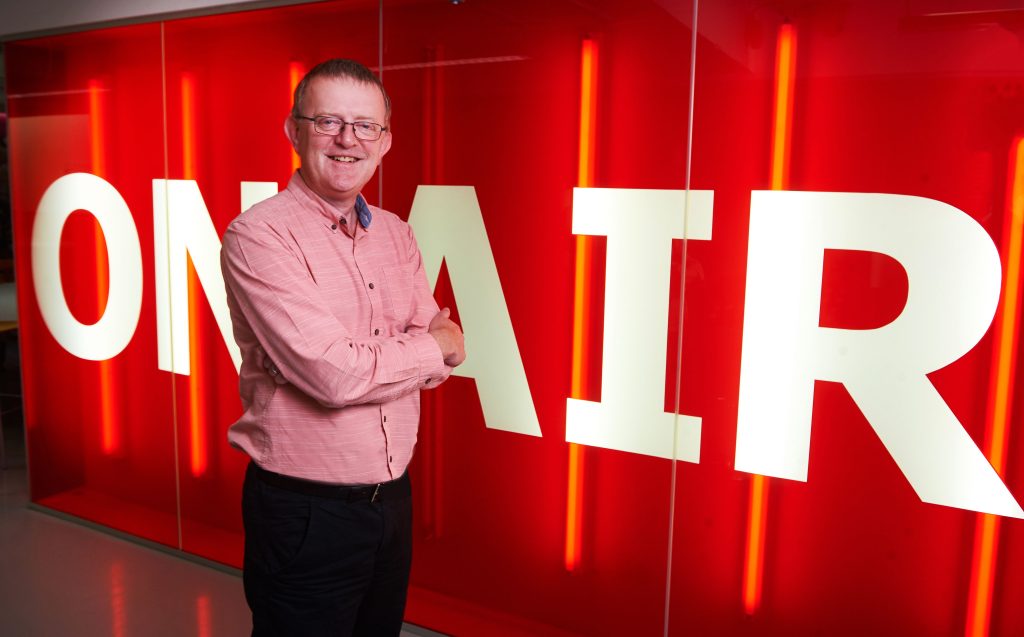
Martyn takes part in a radio interview as part of Gas Safety Week Photo credit: Simon Jacobs
Turning change into opportunity
One product-development period captures Martyn’s approach to change. When mandatory condensing-boiler requirements were being discussed in the mid-2000s, Worcester recognised that the market was about to shift. Martyn and two colleagues wrote the specification for a new range at his house in Worcester over a couple of days. Martyn found it refreshing and liberating to use all the installer feedback and come up with a specification for a suite of condensing appliances.
Among the installer-led ideas was a wall-mounting frame that allowed the pipework to be connected without the boiler needing to be affixed to the wall – particularly useful when installing boilers in cupboards where space is tight. While parts of the market resisted the legislation, Worcester designed around it. The enduring lesson for Martyn is broader: “Use legislation to your benefit. Solve the new requirement or problem rather than simply fight it.”
That does not mean accepting every policy direction without challenge. After years around tables with government departments and industry bodies, his assessment is measured. Some civil servants seek evidence early and genuinely listen; with others, the industry can feel heard without seeing its evidence reflected in the outcome.
The recurring misunderstanding is the reality of a distress boiler replacement. A household without heat or hot water in winter is rarely making a calm, planned technology choice; it needs a safe, affordable solution within days. “Most consumers are not interested in their boiler until it stops working. It goes from the lowest priority in their mind to the highest overnight.”
Technology without tribes
Martyn’s view of the low-carbon transition is neither anti-heat-pump nor uncritical of the route being taken. A heat pump, he says, should absolutely be fitted where it is the right solution. What he dislikes is the polarisation that turns technology into identity – the assumption that selling boilers means opposing heat pumps, or that a heat-pump installer cannot recognise the value of a boiler in the right home.
His preference is for choice based on the property, household and budget. The professional’s role is to guide rather than impose. Hybrids are the technology he believes has been most underestimated: a heat pump can meet much of the space-heating demand while the boiler supports colder periods and familiar hot water, reducing boiler use without wholesale changes to the home.
He is equally convinced that lower-carbon liquid fuels have a role. Through his years with OFTEC, including as chair, he has seen the oil sector test appliances and burners with blended fuels, run trials in real homes and argue for a staged transition. He believes it has adapted more than is often acknowledged.
His OFTEC involvement began through technical and training panels and later the board. What he remembers most is collaboration between tank and boiler manufacturers, training providers and the executive to improve standards and registration. “I am very proud to have been part of it,” he says. “It is one of the industry organisations I will genuinely miss.”
The people behind the products
For all the technological and political change, Martyn’s strongest memories are of people – and laughter. “I have literally cried with laughter at conversations with installers,” he says. “There is a special building-site humour.” Humour mattered, but so did character. Martyn would rather employ somebody who was not quite the best at a skill, but was a good person than somebody brilliant who damaged the team. Harmony, respect and the willingness to work collectively mattered more than individual brilliance accompanied by ego.
Those values shape what he notices in younger installers. Their technical knowledge impresses him, but so does the care they take in customers’ homes: dust sheets, vacuum cleaners and a determination to leave the property as clean as they found it. Technical competence and customer experience have become inseparable.
Asked what he is proudest of, Martyn does not reach for a product, title or policy victory. He hopes he has represented colleagues well, put ideas forward diplomatically and listened to opposing views. He would like to leave a record of “behaving properly, being nice to people and contributing to a Worcester culture that behaves properly too”. A former colleague once described his chairmanship of OFTEC as “laconic”. Martyn was pleased with that.
A future for those who keep learning
Looking ten years ahead, Martyn expects heat pumps to continue growing as new-build homes make them familiar to more consumers and installers. He expects the boiler market to shrink but not disappear, with hybrids, lower-carbon fuels and remote monitoring all becoming more important.
For installers, his advice is unequivocal: multi-skill. A future service visit may involve an oil or gas boiler, an air-to-air heat pump, a hybrid and increasingly sophisticated controls. The person able to understand several technologies will be better placed to serve the whole home and build a resilient business. “A single skill will probably not be enough in future.”
He worries, however, about losing sole traders during the transition. Heat-pump accreditation, design and administration are demanding, but cash flow can be an equally serious barrier when a small business must fund equipment and installation before a grant is redeemed. Without practical routes through those obstacles, excellent one-person businesses could be excluded from a growing market.
That would be a loss because heating remains, in Martyn’s view, a superb career. The workforce is ageing, demand for skill is enduring and someone entering the trade can still find a job for life. His advice is to embrace relevant technologies, recommend what genuinely suits the customer and persist through the difficult early years.
He knows something about persistence. As an apprentice, Martyn left home around six in the morning, cycled seven miles to Malvern, then took a bus and train to college in Gloucester, often returning at 8.30 at night. Friends in unskilled work earned several times his pay, but his parents insisted he stick with it. “Not every day is rosy, but it is worth it in the end.”
Forty-eight years later, he has no unfulfilled work ambition and no sadness about leaving. Not because the industry has become a burden, but because it has been a full career – rich in opportunity, change, humour and people – and there are other things he would now like time to try.
“I will leave without sadness – not because a weight has been lifted, but because I will be free to give other things a shot.”
To provide the best experiences, we use technologies like cookies to store and/or access device information. Consenting to these technologies will allow us to process data such as browsing behaviour or unique IDs on this site. Not consenting or withdrawing consent, may adversely affect certain features and functions.
Functional
Always active
The technical storage or access is strictly necessary for the legitimate purpose of enabling the use of a specific service explicitly requested by the subscriber or user, or for the sole purpose of carrying out the transmission of a communication over an electronic communications network.
Preferences
The technical storage or access is necessary for the legitimate purpose of storing preferences that are not requested by the subscriber or user.
Statistics
The technical storage or access that is used exclusively for statistical purposes.The technical storage or access that is used exclusively for anonymous statistical purposes. Without a subpoena, voluntary compliance on the part of your Internet Service Provider, or additional records from a third party, information stored or retrieved for this purpose alone cannot usually be used to identify you.
Marketing
The technical storage or access is required to create user profiles to send advertising, or to track the user on a website or across several websites for similar marketing purposes.